




• menu
  • TXF
  • Login
  • Lobby
  • Sponsors
  • Support
    • Test your connection
    • FAQs and contact us
Bpifrance

Bpifrance

Since 2013, Bpifrance has become the one stop shop for entrepreneurs with a vastly comprehensive toolbox offered in the field to customers through 50 local branches. Our mission is simple: we believe in serving the future, by being entrepreneur-centric and heavily decentralized. We are the trusted partner of entrepreneurs and champion the interests of those who are visionaries; those who dare to take risks in order to take their businesses further. We have many resources at our disposal to help entrepreneurs, the champions of the 21st century, succeed. We mainly support micro-businesses, SMEs and mid-caps but we also accompany large caps that are considered important to the interests of France in terms of national economy, the territories or employment. We offer a continuum of solutions adapted to every key step in a business’ growth such as: business creation, financing, guarantees or equity investment.

Meet our team at the event

Alban d'Herbès

Alban d'Herbès

Bpifrance
Upgrade
Alban d’Herbes

Alban d’Herbes

Regional Manager - Latin America
Bpifrance
Upgrade
Alienor Daugreilh

Alienor Daugreilh

Vice President Structured Export Finance
Bpifrance
Upgrade
Angela Hiridjee

Angela Hiridjee

Chief of staff to the Executive Director in charge of Export
Bpifrance
Upgrade
Antoine Aushana

Antoine Aushana

Senior Advisor EU and International Relations
Bpifrance Assurance Export
Upgrade
Arnaud Derouffignac

Arnaud Derouffignac

Manager, Environmental and Social
Bpifrance
Upgrade
Arnaud Floris

Arnaud Floris

Coordinator ? Africa
Bpifrance
Upgrade
Aurelien Goyeau

Aurelien Goyeau

Vice-president
Bpifrance
Upgrade
Catherine Dorgnac

Catherine Dorgnac

Head - Middle East, Turkey & Central Asia
Bpifrance
Upgrade
Celeste LAPORTE-TALAMON

Celeste LAPORTE-TALAMON

Bpifrance
Upgrade
Eve Assayag

Eve Assayag

Advisor for UE and OECD negotiations
Bpifrance
Upgrade
Hugues Latourette

Hugues Latourette

Export Credit Director at Bpifrance
Bpifrance
Upgrade
Isaline Merle

Isaline Merle

Bpifrance
Upgrade
Isaline d’Aubigné.

Isaline d’Aubigné.

Export Finance Associate
Bpifrance
Upgrade
Jan Koscinski

Jan Koscinski

Area Manager - Germany, Central & Eastern Europe, Russia, Caucasus
Bpifrance
Upgrade
Lionel Barbaroux

Lionel Barbaroux

Deputy Head - Origination & International Project Finance
Bpifrance
Upgrade
Maëlia Dufour

Maëlia Dufour

President Berne Union and Chief International Officer Bpifrance Assurance Export
Bpifrance
Upgrade
Marianne Wlassewitch

Marianne Wlassewitch

Area Manager - ASEAN
Bpifrance
Upgrade
Marie-Albane Prieur

Marie-Albane Prieur

Director
Bpifrance
Upgrade
Mourad Chouiqa

Mourad Chouiqa

Head - Eastern & Southern Africa
Bpifrance
Upgrade
Pedro Novo

Pedro Novo

Executive Director in charge of Export
Bpifrance
Upgrade
Véronique Zovaro

Véronique Zovaro

Deputy Head of Export Finance
Bpifrance
Upgrade

Sessions we are speaking at

Stream

In the field: Sustainability in export credit

Paul Richards
Global Head of Resources, Energy & Infrastructure,
ANZ (Australia and New Zealand Banking Group)

Kristin Parello-Plesner
Director, Head of Environmental, Social & Governance,
EKF - Denmark’s Export Credit Agency

Arnaud Derouffignac
Manager, Environmental and Social,
Bpifrance

Moderator
Daniel Sheriff
CEO,
TXF

In June 2020 export finance leaders from commercial banks, ECAs and government met at the TXF Digital Olympics in 'The Garden' to discuss how the export finance industry has responded to the demand for sustainability across all business lines. We now advance to the field to discuss practical applications within export finance and roadmap the next 10 years:

  • While sustainable principles spread across all business practises, in terms of investment where is export finance best placed to help? How is our commitment to fulfilling the SDGs & ESGs changing both the projects we choose and the way we finance these?
  • What targets have we set and how do we measure deliverables? Currently where do sustainable projects fit into total export finance volumes? In the next five years how do sustainable investment targets compare to the targets of the complete investment portfolio?
  • How can we use data to track and enforce our commitments? What is the criteria we need for eligibility?
  • How are products on the market from green bonds to SDG linked loans and ESG-tied debt performing? And what new products and innovations can we see coming to the fore?
  • Renewables and energy transition have paved the way, will we diversify into new industries that respond to the SDGs and how can export finance evolve in order to be a suitable product for these?
  • What does this mean for traditional ECA industries and legacy projects? Will we see stranded assets and how does this factor into strategy?
  • How can all actors and stakeholders better collaborate to ensure standards are met? How can we ensure accountability and strict criteria are upheld?
Stream

From ESGs to tangible goals: Making sustainability a reality

Anne Crepin
Head of Export Credit,
SFIL

Steven Mulder
Commercial Excellence Lead APAC,
ING Bank

Katharina Jacoby
Regional Head of Export Finance - Asia Pacific,
Credit Agricole CIB
Marianne Wlassewitch
Area Manager - ASEAN,
Bpifrance

Moderator
Loic Le Sache
Head of Export Finance APAC,
BNP Paribas

We have spent a lot of time quibbling over taxonomies and criteria, but the export finance industry is now taking sustainability far more seriously: some organisations are even pledging up to $200 billion in sustainability-linked financing by 2025. In a shift from previous years, companies are increasingly looking at the carbon footprint or ‘green’ impact that their investments leave behind. To transform ambitious targets into reality, we have got to rethink how we incorporate sustainability into deal-making. We consider how to make this happen:

  • We will need to diversify our sustainability portfolio to meet ambitious targets. Which industries should we be considering outside the renewables space as potentials for sustainable investment? Do the answers lie in real estate and logistics companies looking to build warehouses and properties that meet international standards?
  • How can we embed sustainability into financial structures as well as considering the types of projects we will and will not finance? Which sustainability-tied deals have emerged in the last year, and is a KPI-led incentive scheme the only option?
  • Some countries, notably Indonesia, are still lacking the necessary frameworks to support ESGs. Has the attitude towards sustainability shifted enough in certain countries to see a significant difference?
  • What needs to be done to move away from a world of ‘tick-boxing’ and into a market that takes sustainability seriously?
Stream

Export finance with purpose: The role of the modern ECA debated

Marianne Wlassewitch
Area Manager - ASEAN,
Bpifrance

Sophia Schultz-Renz
Advisor International Cooperation,
Euler Hermes Aktiengesellschaft

Kate DeAngelis
International Policy Analyst,
Friends of the Earth

Nastassja Cernko
Sustainability Manager,
OeKB - Oesterreichische Kontrollbank Aktiengesellschaft
Moderator
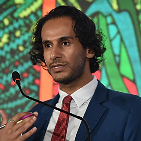
Hesham Zakai
Managing Director,
TXF

An ECA’s mandate is to promote local exports, thereby boosting local economies. By this logic, ECAs should surely have a responsibility to engage in ethical practices that benefit local exporters and the world at large. We ask:

  • Do ECAs do enough to support businesses owned by Black, female, and other marginalized owners, whose lack of access to capital costs the global economy trillions?
  • Should ECAs take a more active stand when it comes to sustainability? Is it becoming an ECA’s role to disengage from projects which harm the environment or fail to provide safe working conditions for staff?
Txf

Copyright © Exile Group Limited (2026). All rights reserved.

The original works published on this website are owned by Exile Group Limited and are accessed by you, subject strictly to the terms of our licence. You must not copy, reproduce, or transmit all or part of the works without our permission including uploading, prompting or otherwise making available the original works to large language models (such as ChatGPT and Google’s Gemini) whether for training, generation, summarising, collation, interpretation or other processing.